
340% PPC ROAS for an Ecommerce Client
Before having me manage their account, they had their campaign set to autopilot, which meant it was only bidding on their brand name and showing better-looking numbers because conversions were being counted against SEO. These numbers look good for Google, and most companies will spend even more money without realizing they are bidding on their own name.
Since I took over, I’ve rebuilt their Performance Max campaign to target non-brand searches and more only.
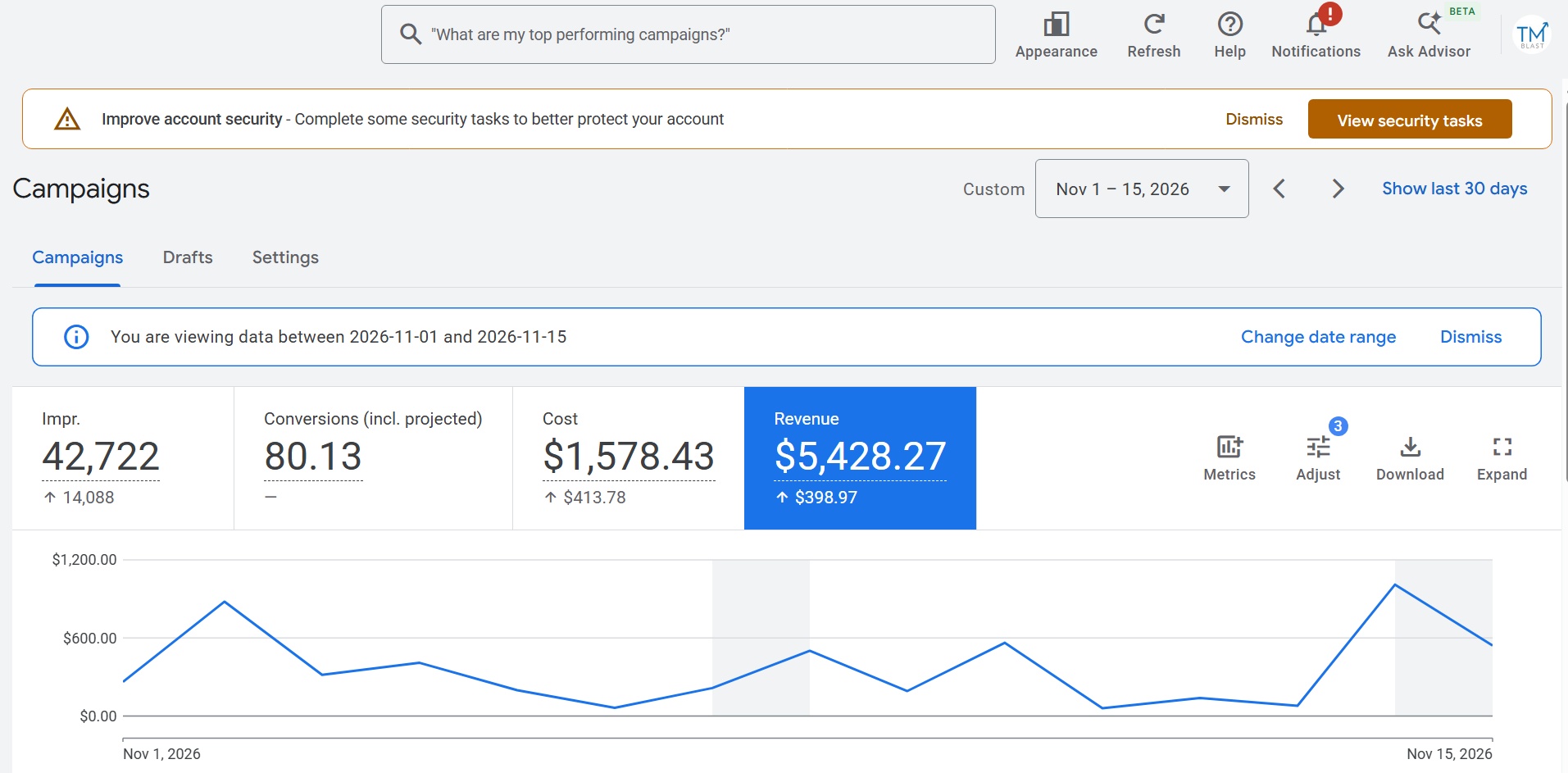
Non-Brand Performance was Missing
Initially, my client created their own Google Ads Performance Max campaign before I took over. Google and a mix of Claude can certainly get you started, but it was the lack of a dedicated consultant reviewing the account to identify the problem. The problem was that, while revenue was up and CPA was down for them, they were only optimizing for their brand name, which meant they were paying for clicks that would have gone to SEO and instead made their PMax campaign look stellar.
When I shared with them that their ads were only showing and converting for their brand name, I changed the strategy to instead focus on the non-brand and optimize from the ground up. My goal was to achieve a 300% ROAS for them, meaning you earn $3 in revenue for every $1 spent. Having a 300% ROAS is very attractive for an e-commerce client because you have more wiggle room to increase spend.
5 Google Ads PMax Changes That Actually Increase ROAS – #ppc
I manage the Google Ads account for an e-commerce client. In November, we had a 340% ROAS (Return on Ad Spend) for their Google Performance Max (Pmax) campaign. Before having me manage their account, they had their campaign set to autopilot, which meant it was only bidding on their brand name and showing better-looking numbers because conversions were being counted against SEO. Since I took over, I’ve rebuilt their Performance Max campaign only to target non-brand searches and more.What Was Done
SEO CTR% Dropped – Sign 1
As mentioned, I began working on their SEO strategy before taking on PPC. In September 2026, I noticed our brand CTR% dropped from 40% to 15%, and that was due to their Performance Max campaign optimizing for the brand only. That was my first sign that I needed to regain SEO control and fix where the ads were showing
Brand / Competitor Exclusions
I excluded their brand name and their competitors from showing our ads. Based on their search terms report, I concluded that when someone searched for a competitor, they would not buy from my client, so I excluded my client from the auction.
Assets for Excellent
When you use Claude to create ads, you may get a good-to-average rank score, which is fine to start. However, when I took over in October, I noticed the ad quality never improved. To help, I rewrote the ad headlines, added sitelinks, and uploaded YouTube videos to their PMax campaign, resulting in an excellent score.
Negative Keywords – Daily
Each day, I would go into their search terms report to see which terms people searched for. From there, I would negative-out words like “free” or “cheap” since they were not driving conversions.
Switched to a ROAS Bid Model
Initially, I rebuilt the Pmax campaign to focus on max conversion value. I wanted to see what we could achieve, and we consistently achieved 300% ROAS. From there, I changed the bid structure to focus on hitting that number, which will help me increase our bids down the road.
Collecting Data
Not directly tied to this case study was the question of where we would go next. One area I pitched to them was creating a new Pmax campaign targeting only new users. To achieve that, I began collecting audiences via people who visited the website. From there, I’m going to create a new campaign and upload that audience to exclude to see what that does.
Final Thoughts
This client of mine is unique because they have hired me for SEO, PPC, and AEO/GEO. All three play well together, which gives me the insight I need to increase their revenue. If I weren’t in charge of PPC, it would negatively impact SEO, and they would likely look for someone else to manage this. Since I managed all three, I was able to spot the problem, reverse it with a non-brand campaign, and now SEO, PPC, and GEO are all working together to drive more revenue without competing directly against each other.